

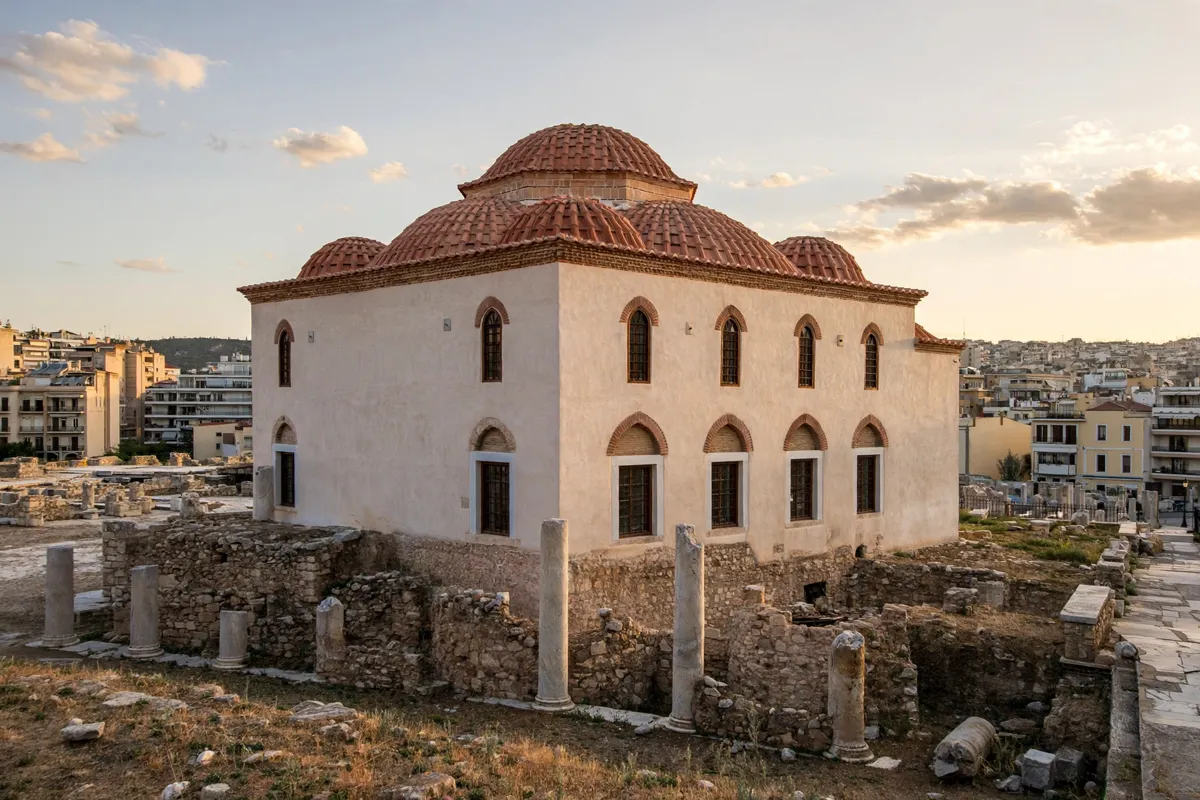
Fethiye Mosque in Athens stands within the Roman Agora, on its northern side near the Tower of the Winds. Built over the remains of a Byzantine basilica, it has been restored and used as an exhibition gallery, making it a historic landmark within an open-air archaeological site.
- Location: Northern side of the Roman Agora, near the Tower of the Winds.
- Access: The mosque is within the Roman Agora; admission information applies to the archaeological site.
- Roman Agora hours: Open daily
- Getting there: Monastiraki station, served by Metro Lines 1 and 3, is about an eight-minute walk from a four-star hotel in Athens.
A brief history of Fethiye Mosque
Fethiye Mosque was built on the remains of a Middle Byzantine Christian basilica dated to the 8th or 9th century. Its position within the Roman Agora places the building amid layers of Athens’ history, from the ancient marketplace to later religious architecture.
A Greek government report describes the mosque as restored and accessible as an exhibition gallery since August 2017. The Ministry of Culture is responsible for preserving Greece’s cultural heritage, including Islamic monuments. The building’s gallery use offers a way to encounter its historic architecture as part of a visit to the archaeological site.
Where is Fethiye Mosque in the historic centre?
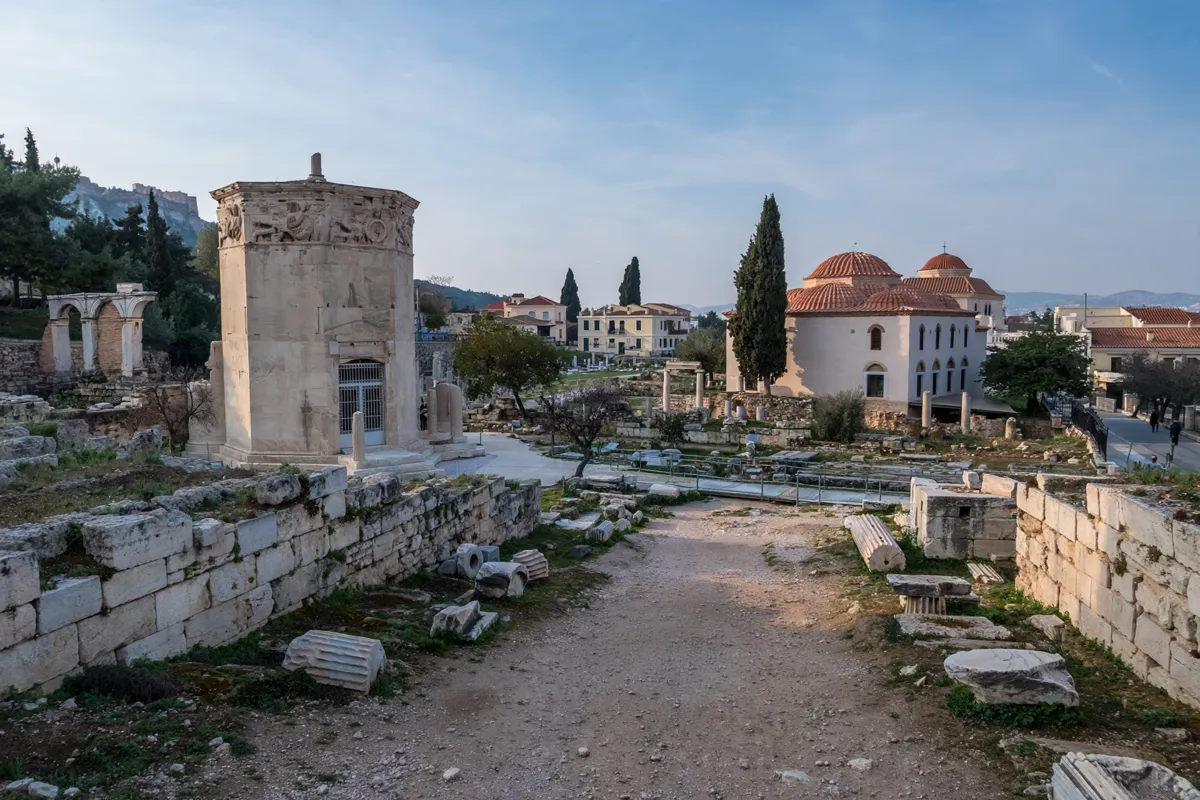
Fethiye Mosque is on the northern side of the Roman Agora, close to the Tower of the Winds. The Roman Agora is an open-air archaeological site in central Athens, and the mosque sits within its grounds rather than apart from them.
The address for the Roman Agora and Hadrian’s Library is Dioskouron Street, Plaka, 10555, Athens. Monastiraki station on Metro Lines 1 and 3 is one way to reach the area. From there, you can walk toward the Roman Agora and Hadrian’s Library.
For a walk that continues through the surrounding neighbourhood, what to see and how to get around in Psiri gives you another nearby area to include in a central Athens itinerary.
How can you visit Fethiye Mosque?
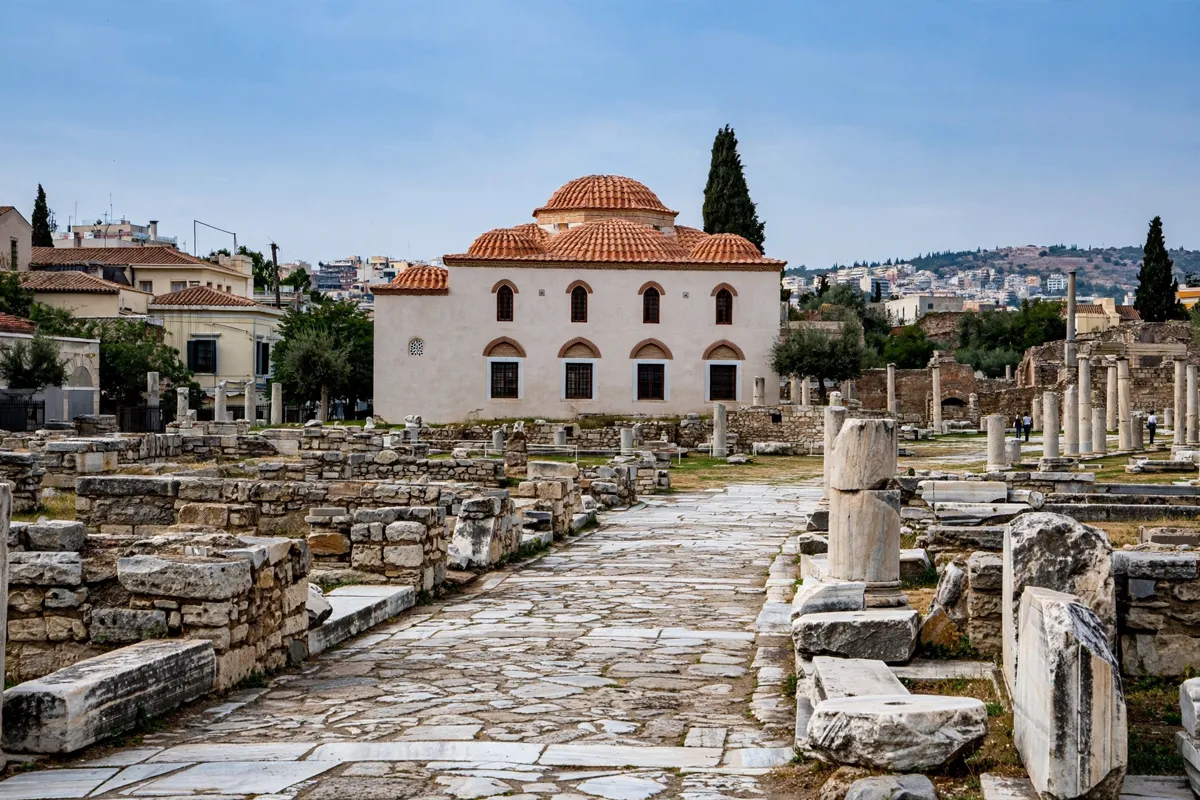
Visit Fethiye Mosque as part of the Roman Agora, and plan around the archaeological site’s admission and opening hours. General admission for the Roman Agora and Hadrian’s Library is €10, with reduced admission at €5.
Summer hours are 08:00–20:00 daily, with last admission at 19:30. Winter hours are 08:00–15:00 daily, with last admission at 14:40. The site is closed on official public holidays. Hours and prices can change, so check the official site before you go; consult the Ministry of Culture’s archaeological-site information for current details.
Buses 025, 026, 027, 035 and 227, along with trolleybuses 1, 2, 4, 5, 11, 12 and 15, serve the Roman Agora and Hadrian’s Library area.
If you plan to add the Ancient Agora, its winter opening hours, from 1 November through 31 March, are daily 08:00–17:00, with last admission 20 minutes before closing. Admission is €20 full price and €10 reduced price, and visitor amenities include an elevator.
What can you combine with a visit?
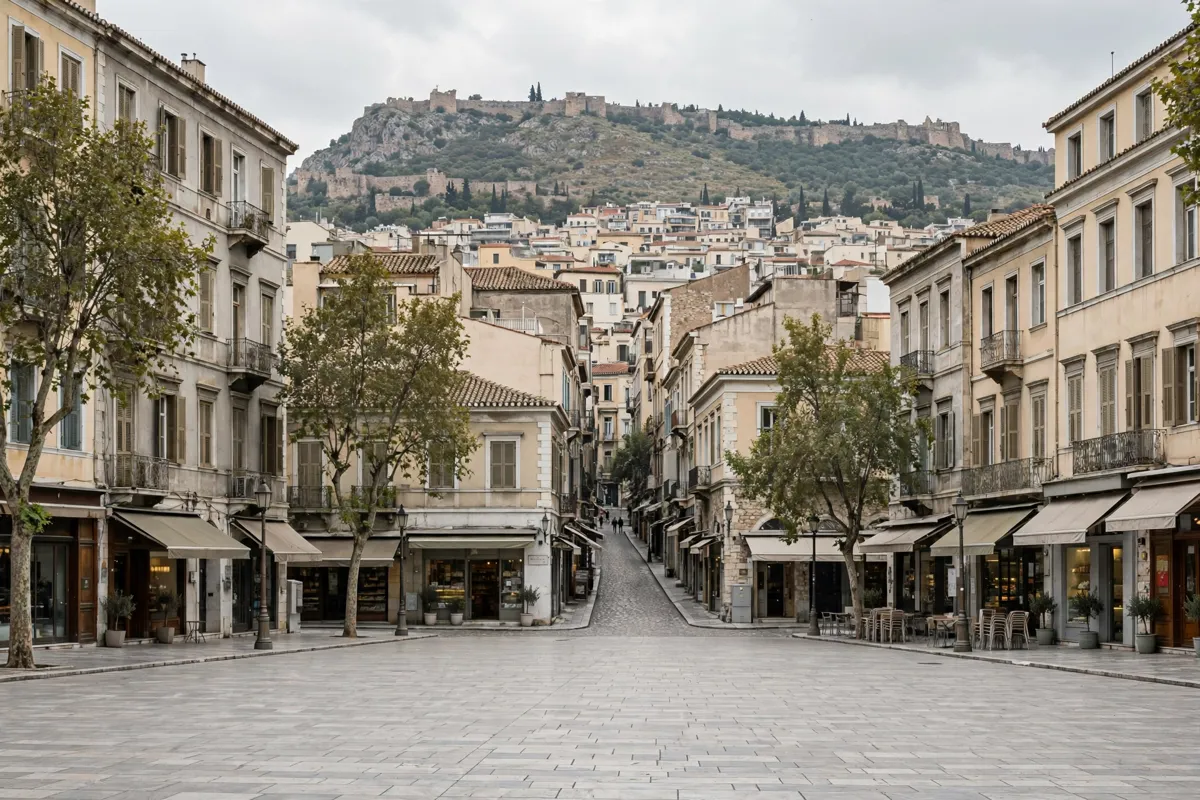
The Roman Agora and Hadrian’s Library make a natural pairing: both are covered by the same admission information, and they are identified together in the historic centre. Hadrian’s Library was built in AD 132 by the Roman emperor Hadrian. You can add it to the same outing before moving on to the surrounding streets.
Monastiraki is another nearby point of reference for the archaeological area. If you want to include its market streets in your plans, what to know about visiting Monastiraki Flea Market covers the market and its surroundings.
FAQs
Where is Fethiye Mosque in Athens?
It stands within the Roman Agora, on the site’s northern side near the Tower of the Winds.
Can you visit Fethiye Mosque?
The mosque has been restored and used as an exhibition gallery since August 2017. It is within the Roman Agora, so plan for the archaeological site’s admission and hours.
How much does the Roman Agora cost?
General admission is €10 and reduced admission is €5 for the Roman Agora and Hadrian’s Library. Check the official site for current prices.
Which metro station serves the Roman Agora?
Monastiraki station, served by Metro Lines 1 and 3, is a way to reach the Roman Agora and Hadrian’s Library area.